
Checking Criminal History in Florence
Begin with the type of Florence record. The Police Records Division holds incident, offense, arrest, crash, and related agency material. Florence Municipal Court holds city traffic and misdemeanor case activity. County detention and the Lauderdale court system become relevant when a Florence arrest leads to booking or a state-law case outside municipal jurisdiction.
- Identify whether Florence Police, another agency, or a court created the record.
- Ask Florence Police Records for an existing report by case number, date, location, and record type.
- Search or call Florence Municipal Court for a city citation, traffic case, or locally prosecuted misdemeanor.
- Check Lauderdale detention and county court channels if the matter moved beyond the city level.
- For a fingerprint-linked personal Alabama history, use ALEA's official self-review process rather than a city name search.
The city's online citation tool supports a narrow case lookup. It does not replace a police narrative or a final District or Circuit Court judgment.
Requesting Florence Police Records
Florence Police Records is at 702 S. Seminary Street. The records line is 256-768-2729, and published counter hours are weekdays from 8 a.m. to 5 p.m. Requests can begin by phone, email at FPDRecords@florenceal.org, or at the counter. Give the case number when known, the date and location, and whether the request seeks an incident, arrest, crash, CAD or 911, or video record.
The official Florence records page shows the city's direct contact and service channel.
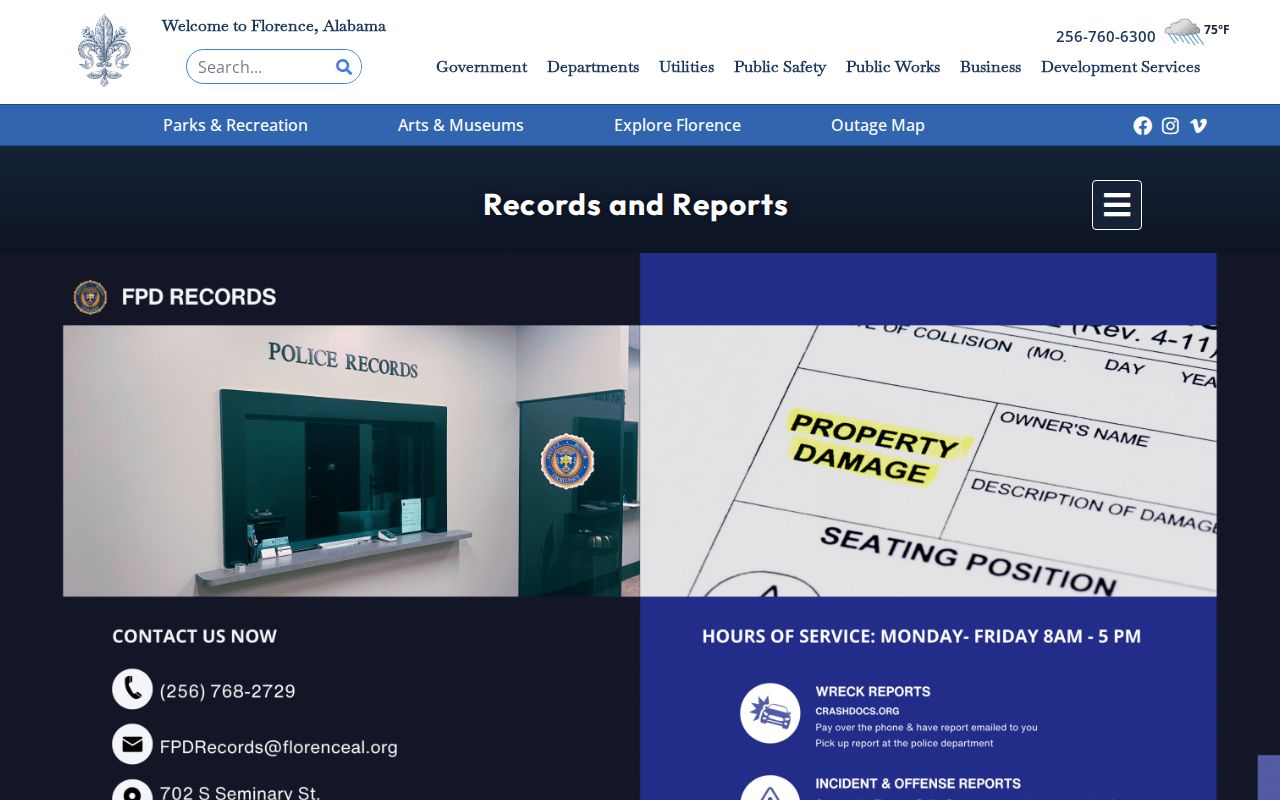
That office maintains, releases, and archives Florence police material and also processes local checks, subpoenas, expungement work, and information requests.
Current published charges are $10 for a wreck report, $10 for an incident or offense report, $15 for fingerprints, $10 for a local check, and $10 for an event permit. Incident and offense copies are available in person with cash or card. Wreck reports may also use CRASHDOCS.org, phone payment with an emailed copy, or counter pickup.
Florence Police Department Records
The Florence Police Department creates the local incident and arrest narrative. Its front or media side of an incident or offense report is public under department policy. The back side, supplements, arrest reports, evidence vouchers, witness material, photographs, recordings, and officer work product are generally withheld. A victim may receive a fuller report with witness or offender information redacted. Traffic reports are available to named parties, while third-party copies remove personal information.
The official Florence Police Department page also documents the department location and services.
The city source confirms where Florence records begin, even when booking or prosecution later moves into Lauderdale County systems.
FPD does not take a new incident report by telephone, mail, or internet. That rule separates two tasks that are easy to confuse. A person seeking an existing Florence copy contacts Records. A person reporting a new event contacts dispatch so an officer can respond and create the first report. The records-request form cannot serve as a substitute for that police response.
Florence Records in the Police App
The official Florence Police Department app adds mobile routes that the records counter alone does not supply. It advertises tips, alerts, wreck-report routing, department contacts, a crime map, parking payment, a property-release link, and a Message Us feature. It does not provide definitive warrant confirmation or a complete city criminal-history search.
Florence publishes the app for Apple devices and Android devices. Use its wreck-report and contact links as official routing tools. For an existing incident or arrest report, the Records Division remains the direct source. For an urgent event or a new report, follow police dispatch instructions rather than sending a records request.
Florence Arrests and Bookings
Florence does not advertise a separate long-term city jail. City sources route detention calls to the Lauderdale County Detention Center. That creates two distinct records after many arrests: Florence Police holds the report and probable-cause narrative, while county detention holds intake identity, booking time, fingerprints, initial charges, bond, and custody status.
A recent arrest may not yet have a filed court case. Confirm the Florence report first, then check detention, then identify the court. A city misdemeanor or traffic matter can remain in municipal court. Felony and other state-law matters move through Lauderdale District or Circuit Court. The county-wide Lauderdale arrest lookup explains that broader chain without turning the city page into a county booking guide.
Note: A booking charge is an intake allegation, not proof of guilt or a final Florence case result.
Florence Reports Reach County Booking
The route depends on what Florence Police initiates. The officer's report records the alleged event and arrest facts. Lauderdale detention then creates the booking record. A municipal citation or misdemeanor may remain with Florence Municipal Court, while a state misdemeanor, preliminary felony matter, or indicted felony reaches Lauderdale District or Circuit Court.
This split explains why one portal cannot answer every Florence criminal-record question. The report has narrative detail. The booking confirms intake and custody. The court record shows the filed charge, plea, orders, disposition, and sentence. For a case that has moved to state court, the Lauderdale County criminal court cases page covers the clerk and Alacourt channels.
Charges can also change at each point. The intake label may differ from the complaint, a grand jury may return a different charge, and the judgment may record a dismissal, acquittal, plea, or conviction. Anyone checking their own Florence history should obtain the final case-action summary before asking a police source or ALEA to correct a mismatch.
Municipal Court Records in Florence
Florence Municipal Court hears misdemeanors and traffic matters initiated by Florence Police within the city. Court is scheduled Tuesdays and Thursdays at 8 a.m. and the third Tuesday at 1 p.m. Magistrates can be reached at 256-760-6625 during the weekday office schedule. Cash, cashier's check, money order, and cards are accepted, with a processing fee for cards. Online payment depends on the charge.
The Florence Municipal Court page provides the local schedule and contact details.
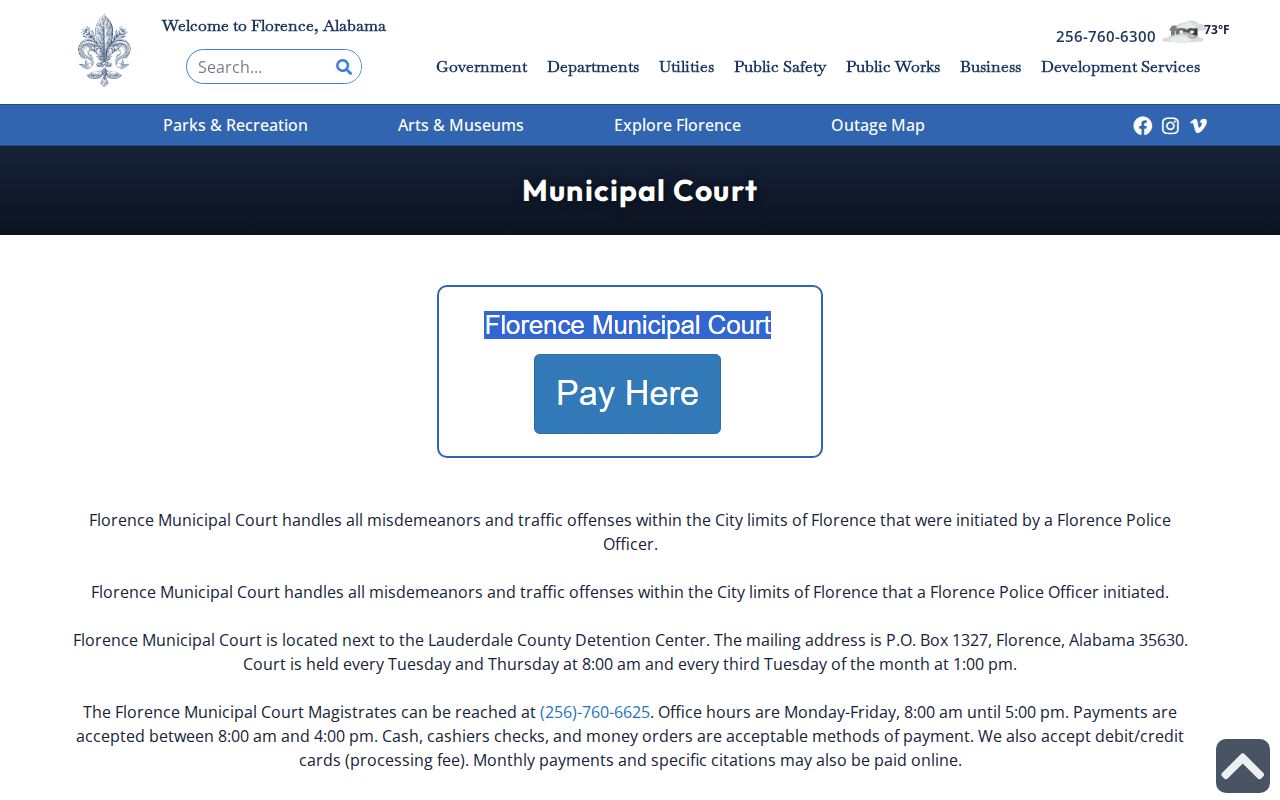
The municipal court is the first court source for an eligible Florence traffic or city misdemeanor matter, not for a Lauderdale felony file.
| Court name | Florence Municipal Court |
|---|---|
| Case types | Florence Police traffic matters and locally initiated misdemeanors within city jurisdiction. |
| Search channel | Online municipal ticket search, magistrate phone, or court office. |
| Record details | Citation or case identifiers, settings, payment eligibility, plea, disposition, and city-court orders as recorded. |
| Copies and payment | Confirm copy terms with the court; payment methods vary and cards carry a processing fee. |
The Florence municipal ticket search shows the city's two lookup modes.
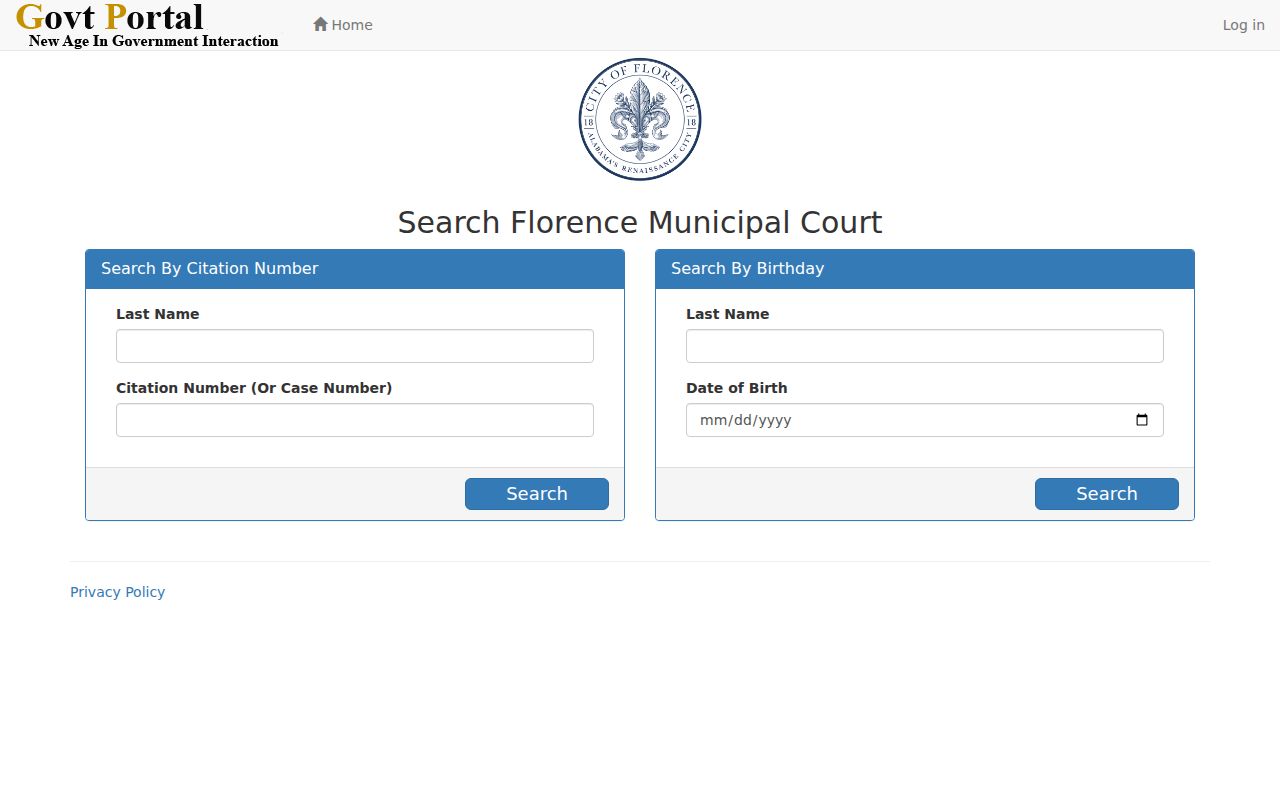
A search can use last name with citation or case number, or last name with date of birth. No login is needed to start.
Florence Court Address Conflict
Florence publishes two different municipal-court locations. The court contact block lists 110 W. College Street. The narrative describes the court beside the detention center, and the Wanted Persons page directs people to 653 S. Seminary Street. These official statements cannot safely be merged into one assumed address.
Call the magistrate at 256-760-6625 before visiting. State the purpose, such as a record copy, court appearance, warrant question, or payment, and ask which entrance or building applies. This conflict is especially important because the records counter itself is at 702 S. Seminary Street, a separate Florence police address.
Where Florence Records Go
Florence records remain split even after the justice process advances. The Police Records Division keeps the agency report. Municipal Court keeps eligible city cases. Lauderdale courts hold filed District and Circuit matters. Courts and agencies then report qualifying fingerprint-linked events and dispositions into Alabama's criminal-history system.
Record flow: Florence Police Department › Florence Municipal Court or Lauderdale County Courts › Alabama Law Enforcement Agency CJIS
For recent city activity, begin with Florence Police or the municipal clerk. For a final felony result, use the Lauderdale Circuit Clerk. For review of one's own statewide fingerprint-linked record, use ALEA's personal CHRI process. The systems may differ because charges change, reports arrive at different times, or a disposition has not linked to the arrest cycle.
Florence Warrant Records Need Confirmation
The Florence Wanted Persons page warns that warrants are issued and cancelled around the clock, while its web content updates only during the workweek. The linked list also carried an update notation from 2023 during research. A displayed name is not proof of an active warrant and does not imply guilt.
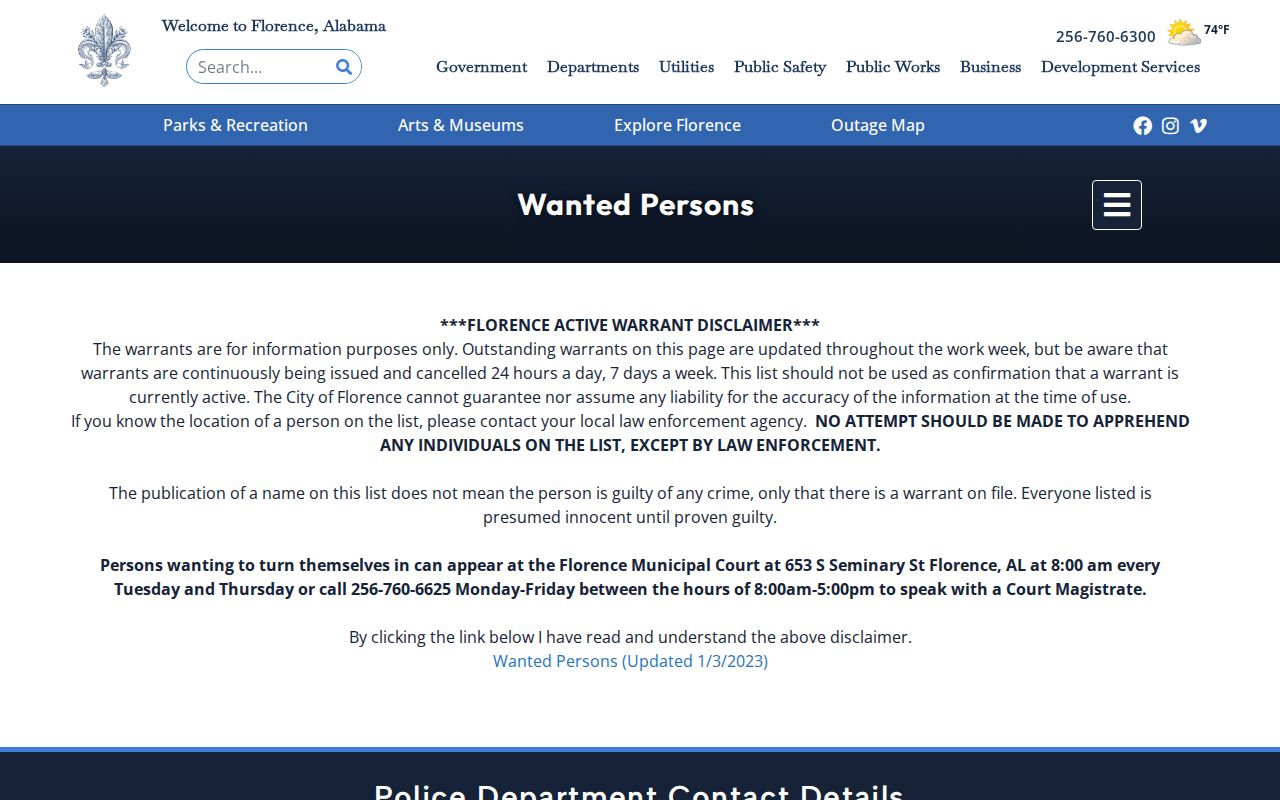
The warning directs confirmation and resolution to the court, not to a private list or personal confrontation.
Florence says a person addressing a city warrant may appear at Municipal Court at 8 a.m. Tuesday or Thursday, or call the magistrate weekdays from 8 a.m. to 5 p.m. Because the address conflict remains, call first. Never attempt to arrest a listed person.
A Florence web list can lag even when it was accurate at publication. The issuing court or magistrate can check whether a warrant remains active, whether a bond or appearance is required, and where the matter must be handled. The police page is an alert channel, while the court is the confirmation and resolution channel.
Public Access Rules in Florence
Florence police and court records fall under Alabama access law, but public status depends on the document. Juvenile and Youthful Offender matters, victim identities in protected cases, personal identifiers, sealed or expunged files, and active investigative content may be withheld or redacted. Ask the office to identify the basis for withholding and to release any separable public portion.
Key Alabama authorities:
Alabama Code section 36-12-40 gives Alabama citizens access to public writings unless another law provides an exception.
Alabama Code section 36-12-41 addresses certified public copies and lawful fees.
Alabama court privacy and confidentiality rules govern sealing, redaction, and protected court data.
Florence policy requires supervisor approval before report release. It also distinguishes requesting an existing copy from filing a new incident report. Florence Police says a new incident report is not taken by phone, mail, or internet; dispatch sends an officer for follow-up.
Florence Digital Criminal Records
Florence began converting records filing and search functions to computers in 1996. Officers began creating digital reports in 2015. The Records Division now supports National Incident-Based Reporting System data and Alabama E-Crash work. Those dates explain why older Florence material may have a different format or require more staff help than a recent report.
The Florence Applications and Forms page provides the official Police Records Request entry.
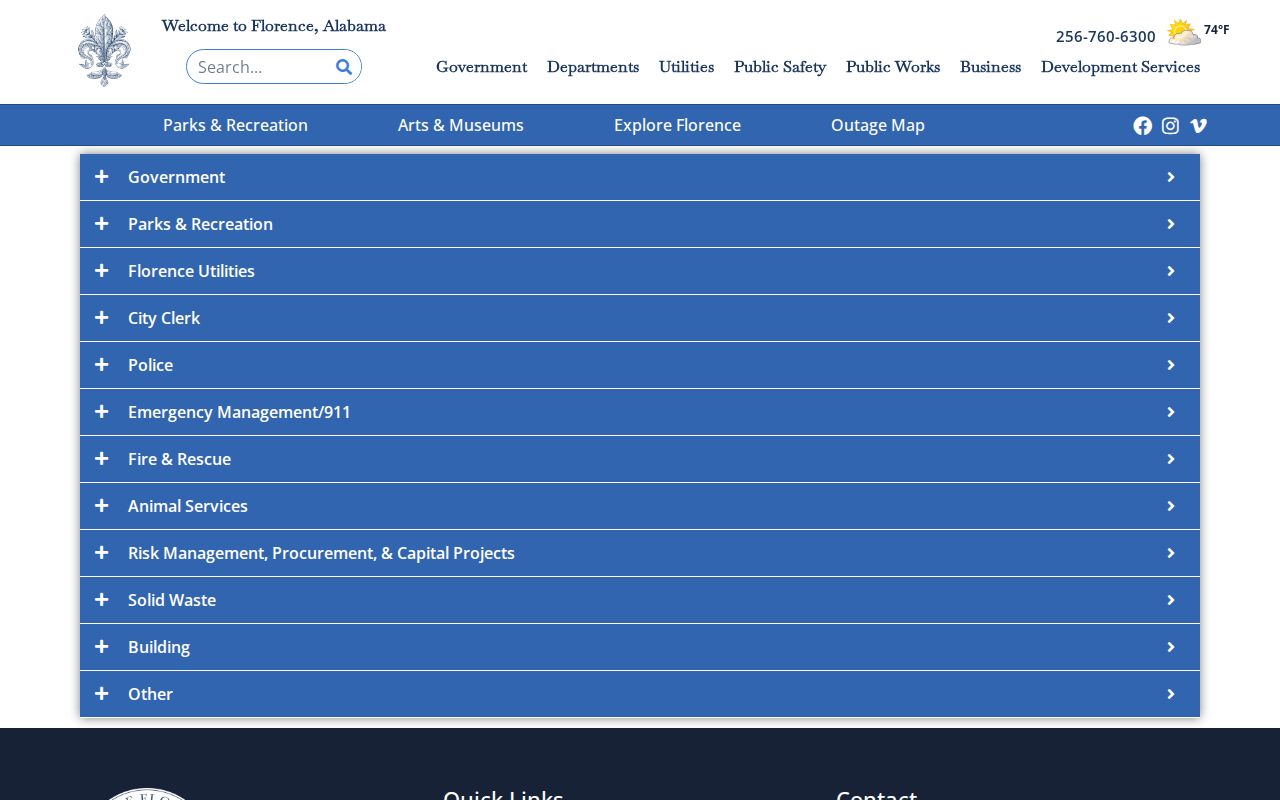
The form index is a request route, not a published field inventory, so have the case number, date, location, record type, requester details, and delivery preference ready.
Florence Police reports roughly 3,000 patrol calls per month, while thirteen detectives investigate about 1,800 criminal cases per year. Those figures describe agency workload, not convictions or unique defendants. The city's 2024 FBI agency totals likewise count reported offenses, not court outcomes. A searcher still needs the municipal or county court disposition to learn how a filed charge ended.